Ben Vogel · 25 October 2026
Oregon Collectives Explore Climate-Adapted Species Through Hand-Formed Public Installations
Groups across Oregon have begun systematic trials of climate-adapted tree species in hand-formed public installations, with several collectives coordinating efforts that combine traditional forming techniques and species selected for shifting environmental conditions. These projects focus on public spaces where wood elements must withstand variable moisture, temperature swings, and longer growing seasons projected for the Pacific Northwest. Data collection started in early 2025, and observers note expanded planting and forming phases scheduled through October 2026.
Background on the Collectives and Their Methods
Multiple worker-owned groups in the Willamette Valley and coastal regions have pooled resources to source and process lumber from species such as drought-tolerant oak variants, fire-resilient pine hybrids, and faster-growing alder strains developed through university breeding programs. Hand-forming remains central to the work because it allows on-site adjustments that machine production often cannot accommodate, and collectives report that this flexibility reduces material waste when pieces must fit irregular park sites or public plazas. According to records from the U.S. Forest Service, these species show improved survival rates under elevated summer temperatures compared with traditional Douglas-fir stock.
Forming crews shape green wood using steam and compression jigs built on-site, then allow pieces to dry in place within the final installation footprint. This sequence lets the material adjust to local humidity before final anchoring, and researchers from Oregon State University have documented lower checking rates when drying occurs after installation rather than in controlled kilns. The approach also lets crews incorporate live-edge sections that retain more of the tree's natural grain, which in turn supports public education panels placed beside each structure.
Species Selection and Climate Data
Trials emphasize species that maintain structural integrity while requiring less irrigation once established. Figures from the Canadian Forest Service indicate that certain white oak provenances from the American Midwest have extended their viable range northward and westward, and Oregon groups have imported small quantities for testing under local conditions. In parallel, collectives have planted test rows of incense cedar selections known for resistance to bark beetles that have expanded their range in warming forests. Growth measurements taken every six weeks show these selections averaging 12 percent greater diameter increment than control plots during the 2025 season.
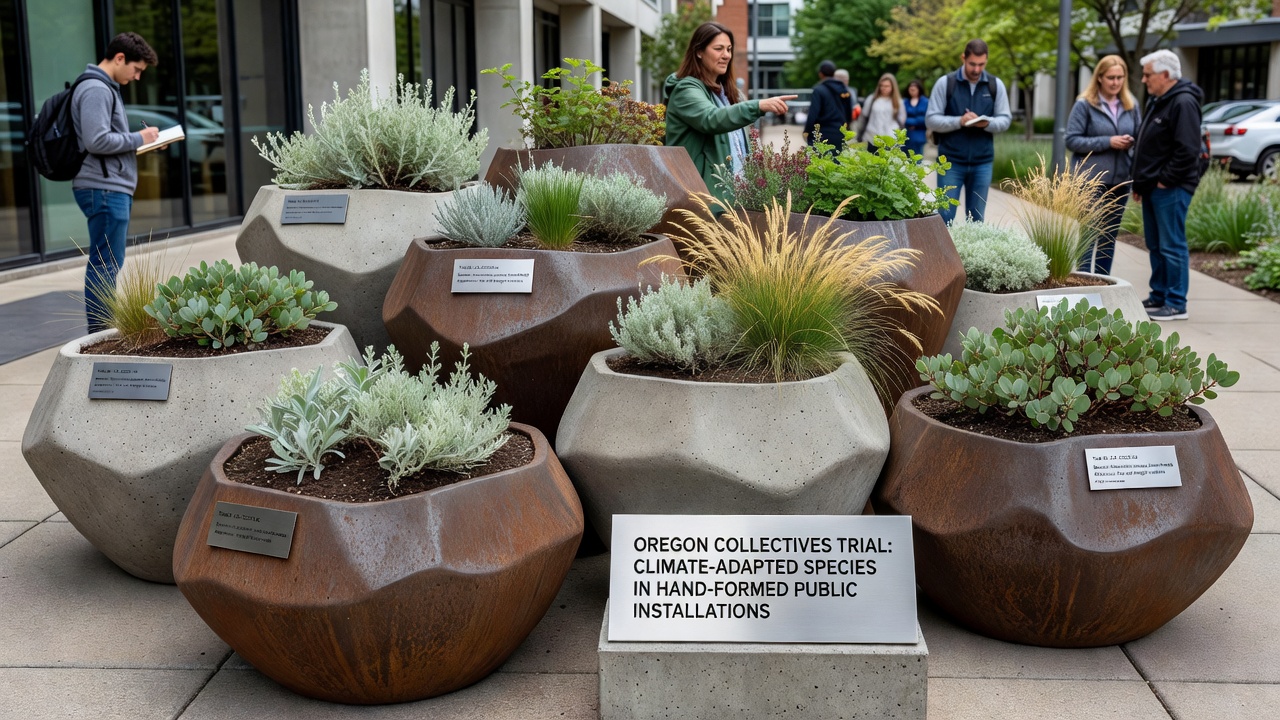
Public installations serve dual purposes as seating, shading, and demonstration sites. One project in Eugene incorporated bent incense cedar benches around a central planter of the same species, allowing visitors to compare visual and tactile qualities while the wood weathers. Another installation near Bend uses drought-tolerant oak for pergola elements that support native vines, and maintenance crews record lower replacement needs after the first winter compared with earlier prototypes built from standard lumber.
Public Engagement and Monitoring Through 2026
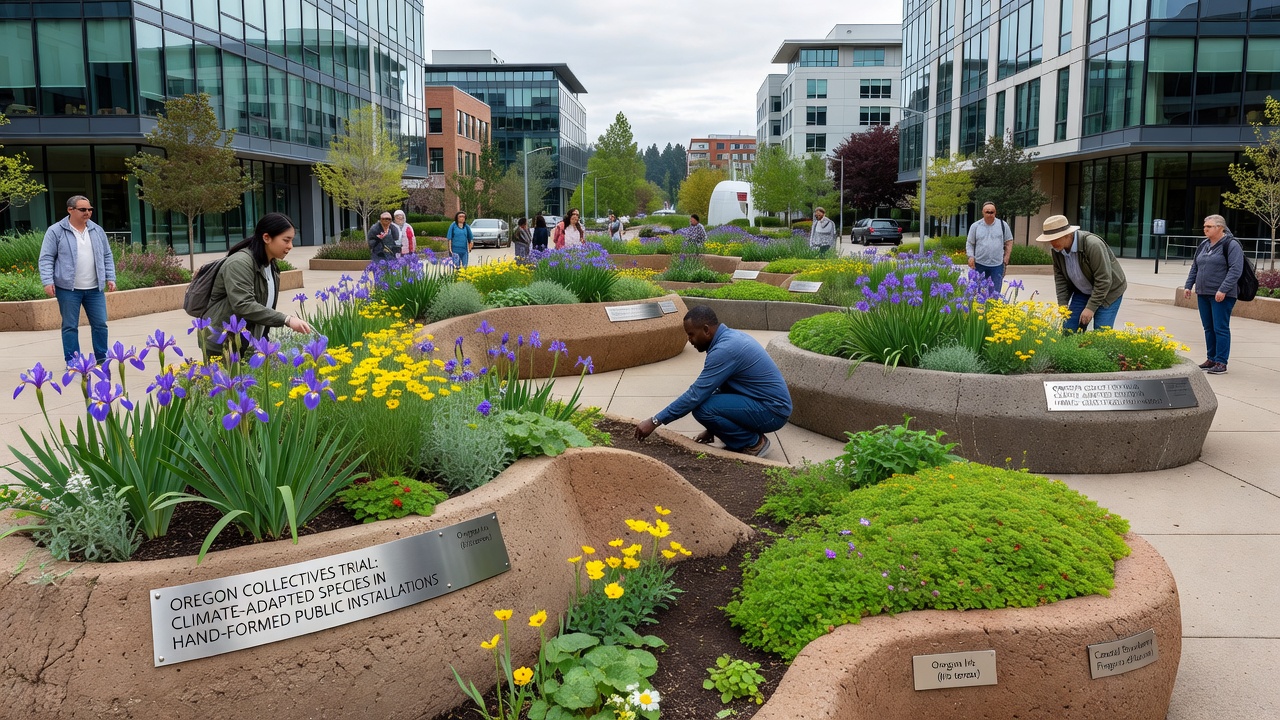
Community meetings held in spring 2025 established criteria for site selection, and participants emphasized durability alongside educational value. Installations therefore include QR codes that link to growth charts and species information maintained by the collectives. Monitoring protocols require quarterly inspections for movement, cracking, and finish performance, with results compiled into shared databases accessible to other regional groups. By October 2026 the project expects to release a full-season dataset covering three distinct climate zones within the state.
Hand-forming crews continue to refine joint details that accommodate seasonal swelling and shrinking. One technique involves leaving small expansion gaps at mortise-and-tenon connections, then filling them with compressible wooden wedges that adjust over time. Observers note that these details emerged from iterative adjustments rather than initial design drawings, and similar refinements appear in multiple installations. The process demonstrates how field experience can inform specifications that laboratory testing alone might overlook.
Resource Sharing and External Partnerships
Collectives have established seed and scion exchanges with forestry programs in British Columbia and California to broaden genetic diversity in future plantings. A report from the Australian Department of Agriculture, Fisheries and Forestry on climate-adapted eucalypt trials has prompted initial discussions about testing compatible hardwood species under Oregon conditions, although regulatory review remains ongoing. These partnerships supply both planting stock and comparative data that help refine local expectations for growth rates and maintenance intervals.
Conclusion
Oregon collectives continue to expand hand-formed installations that test climate-adapted species in real-world public settings. Records compiled through October 2026 will provide the first multi-year performance baseline for the selected varieties under regional conditions. The work combines established forming practices with updated species choices, and the resulting structures serve both functional and informational roles in communities across the state. Continued monitoring and inter-regional exchanges supply the data needed to scale successful approaches while maintaining the hands-on methods that define the collectives' output.