Willa Foster · 13 September 2026
Moisture Sensors Revolutionize Precision in Steam-Bent Furniture Production
Steam bending has long served as a core technique in furniture making where woodworkers heat and saturate timber with steam to make it pliable before shaping it into curves for chairs, tables, and frames, and recent integration of moisture sensors now allows manufacturers to monitor water content levels in real time so they can achieve consistent results across batches while reducing material waste and structural failures.
Traditional Challenges in Steam Bending Processes
Wood species such as oak, ash, and walnut respond differently to steam exposure because their cellular structures absorb and release moisture at varying rates, and without precise measurements artisans historically relied on visual cues or timed intervals that often led to over-bending or cracking when internal moisture dropped below optimal thresholds. Researchers at institutions across North America and Europe have documented how uneven drying creates internal stresses that compromise joint integrity years after assembly, and data from industry reports indicate that up to 15 percent of steam-bent components required rework in facilities using manual methods alone.
Those who have studied production logs note that temperature fluctuations in steam chambers further complicate outcomes since higher heat accelerates evaporation from the surface while the core remains saturated, creating gradients that sensors now track continuously. Manufacturers in regions like Scandinavia and Australia adopted early monitoring tools in the 2010s, yet widespread adoption accelerated only after sensor accuracy improved to within 0.5 percent moisture content readings.
Integration of Sensor Technology into Workshop Flows
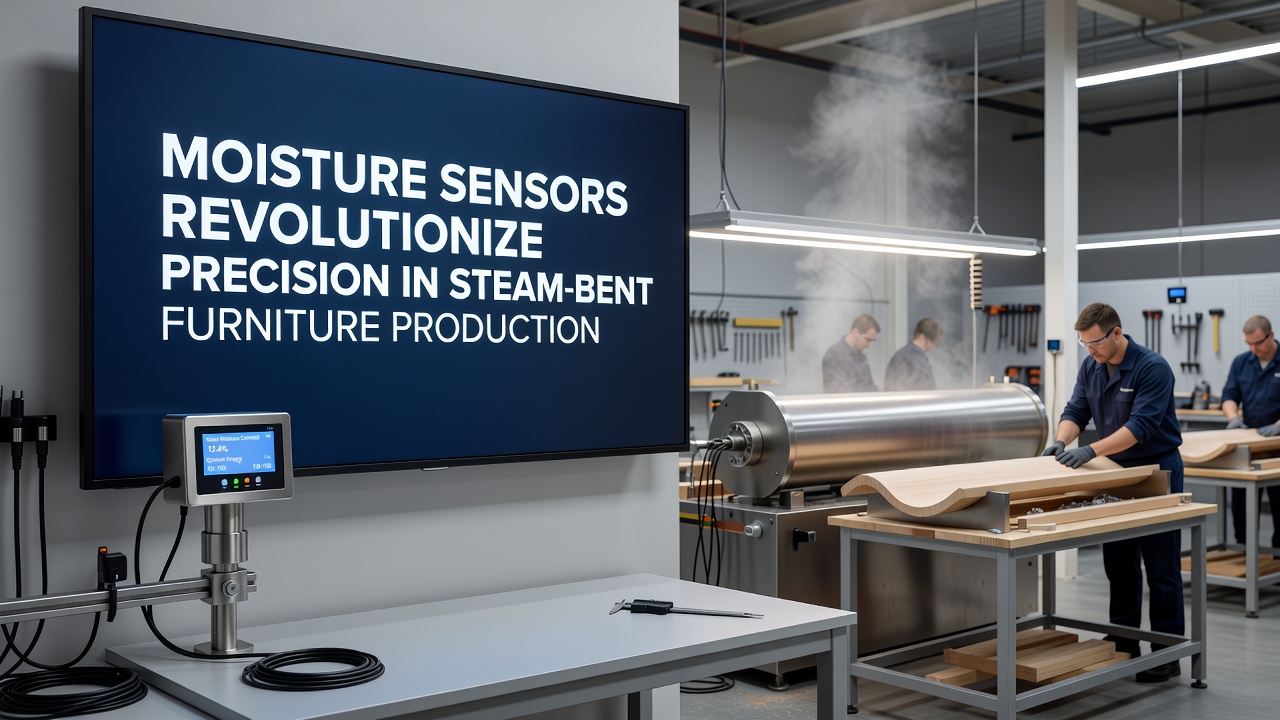
Modern setups embed probes directly into bending forms or attach wireless units to wood surfaces before steam exposure begins, and these devices transmit readings to control panels that adjust steam duration or pressure automatically when targets near 20 to 25 percent moisture content are reached. Facilities report that such automation shortens cycle times by 20 to 30 percent compared with older stopwatch approaches, allowing higher throughput without sacrificing the tight radii demanded in contemporary chair designs.
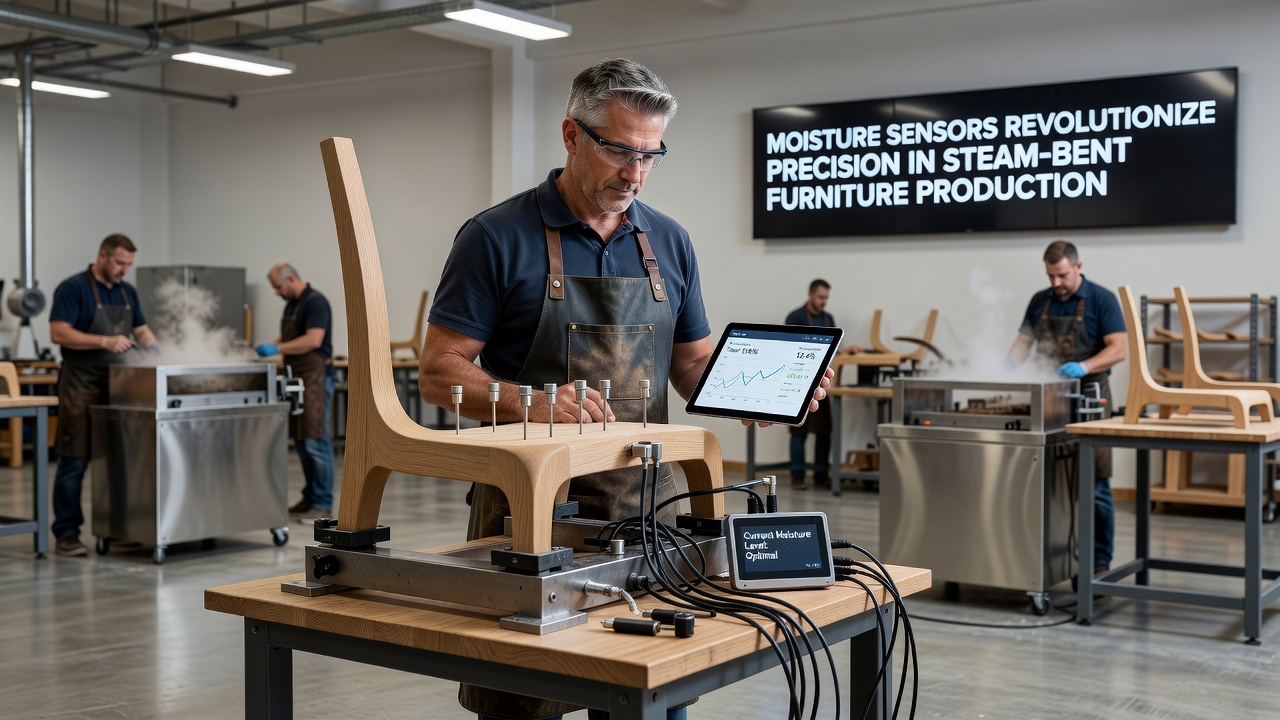
One production team in British Columbia documented how pairing sensors with climate-controlled drying rooms after bending minimized post-process distortion, and similar protocols appear in guidelines from the USDA Forest Products Laboratory that emphasize gradual moisture equalization to lock in shapes. European manufacturers have drawn on comparable findings from the European Forest Institute reports that link sensor use to improved yield rates in high-volume lines.
Case Examples from Current Manufacturing Sites
Take one mid-sized operation in Vermont that retrofitted its steam tunnel with inline sensors last year, and records show defect rates fell from 12 percent to under 3 percent within six months as operators gained the ability to intervene before wood fibers exceeded safe compression limits during forming. Another facility in Melbourne integrated the same hardware into robotic bending arms, enabling repeatable curves for export-grade tables while meeting stricter sustainability certifications that reward reduced scrap.
Observers note that small workshops benefit equally because portable sensor kits now cost less than earlier industrial models, and training programs offered through trade associations help crews interpret data without needing engineering backgrounds. September 2026 marks the scheduled rollout of updated ISO standards for moisture monitoring in bentwood processes, and preliminary drafts suggest requirements for documented sensor calibration that could standardize practices across borders.
Technical Specifications and Data Handling
Sensors typically operate on capacitance or resistance principles calibrated for specific wood densities, and software dashboards compile historical readings into graphs that reveal patterns across different lumber batches or seasonal humidity shifts. Calibration routines recommended by equipment suppliers involve periodic checks against oven-dry test samples, ensuring accuracy stays within manufacturer tolerances even after hundreds of cycles.
Those who've tracked adoption rates point out that wireless models reduce cable clutter around hot steam equipment, while battery life improvements now support full eight-hour shifts without recharging. Data logs also support traceability requirements in markets that demand proof of consistent quality control for contract furniture orders.
Future Developments Expected by Late 2026
Industry analysts anticipate further miniaturization that allows sensors to remain embedded in finished pieces for long-term performance monitoring, and pilot projects already explore AI-assisted prediction of optimal bending windows based on incoming wood moisture profiles. Such advances could extend the technique to previously challenging species or thinner stock that currently risks breakage under traditional handling.
Conclusion
Moisture sensor adoption continues to refine steam-bent furniture production by supplying objective measurements that replace guesswork, and facilities that implement these tools demonstrate measurable gains in consistency and resource efficiency. As standards evolve toward September 2026, the combination of established woodworking knowledge with digital oversight positions manufacturers to meet growing demand for precisely formed, durable pieces across global markets.